Loading…
Loading…
In-depth guides for classic quilt block patterns — with history, step-by-step instructions, color advice, and live interactive previews. From your first nine patch to Storm at Sea.
Round robins, quilt-alongs, mystery quilts, online bees, block-of-the-month programs, charity quilting — the rest of the traditions that make this craft feel like a craft.
Send your quilt center off to four or five other quilters, let each one add a border, and trust the process — that's a round robin, and it's one of the most rewarding kinds of swap there is.
Read the guide →A quilt-along — QAL, if you're typing — is when a group of quilters sews the same pattern on the same schedule, sharing progress, troubleshooting together, and finishing within a few weeks of each other. It's part class, part book club, part group cheer.
Read the guide →A mystery quilt is one where you sew installment by installment without knowing what the finished quilt will look like. You cut the pieces the designer tells you to cut, you sew the units she tells you to sew, and the picture only emerges in the last clue. It's part patchwork, part puzzle, and entirely thrilling.
Read the guide →A block of the month — BOM, in quilting shorthand — is a year-long project where you make one quilt block each month. By December you have twelve blocks ready to set into a quilt. It's the most forgiving way to make a sampler, and it's been the backbone of guild programming for decades.
Read the guide →An online quilting bee is a small group — usually six to twelve quilters — where each month, one member is the "queen" and receives a block from every other member. Twelve months and you have a quilt's worth of blocks made by friends from across the country.
Read the guide →Charity quilting is the practice of making quilts to give away — to wounded veterans, sick children, foster kids, refugees, hospice patients, fire survivors, anyone whose life has been hard and could use the weight of cotton and love. It's the part of quilting that runs on no praise and asks for nothing back.
Read the guide →Row by Row started as a summer-long quilt shop crawl — visit a shop, get a free row pattern, sew it, drive to the next shop, repeat. Quilters made road-trip quilts a row at a time, with each row carrying the soul of the town it came from.
Read the guide →A secret sister swap pairs you anonymously with another quilter for months of small gifts — fat quarters in the mail, a finished mini quilt for her birthday, a hand-pieced block for Christmas — without her knowing it's you. At the big reveal at the end, you finally meet the friend who's been spoiling you all year.
Read the guide →A fabric swap is the simpler cousin of a block swap — instead of mailing finished blocks, you mail fat quarters, yardage, or precuts. You ship your bundle, you receive a bundle of equal value back, and everybody's stash grows wider without anybody making a single block.
Read the guide →The building blocks every quilter learns first. Master these and you can make almost anything.
A step-by-step guide to cutting, attaching, and finishing quilt binding by hand or machine
Pin basting, spray basting, and thread basting — how to hold your quilt sandwich together for quilting
The back of a quilt gets one-third of the fabric and one-tenth of the thought. Here's how to choose backing that behaves — wide backs vs. pieced backs, how much to buy, and the mistakes that only show up after quilting.
Turning a loved one's clothing — shirts, baby clothes, flannels, neckties — into a quilt that keeps them close
Machine washing, hand washing, drying flat, and the care that keeps a handmade quilt beautiful for decades
Batiks are the fabric quilters either adore or haven't tried yet — hand-dyed color that shifts across every yard, a tight weave that behaves beautifully, and no wrong side. Here's what makes them different and how to sew them well.
The most versatile unit in patchwork — master this and you can make hundreds of different quilt patterns
The first block most quilters learn — simple, fast, and the foundation of dozens of classic patterns
Three strips, one seam allowance, infinite layouts — the fastest quilt you can make
Four triangles meeting at the center — the essential unit for star points, hourglasses, and pinwheels
The simplest graphic block in quilting — five squares arranged in a plus sign
Two four-patch units and two plain squares combine into a fast, versatile block with endless scrappy potential
Ohio Star, Sawtooth Star, Churn Dash, and Diamond in Square — the great geometric star traditions.
Eight crisp star points emerge from four quarter-square triangle units — a pattern that rewards precise piecing
A center square, four half-square triangles, and four rectangles — a classic mid-19th century design with bold graphic impact
A center square, four background squares, and four corner half-square triangles pointing inward — one of the simplest true star blocks
Four flying geese units form four star points around a center square — a step up from Ohio Star in visual complexity
Pinwheels, Flying Geese, Windmills, and Chevrons — patterns that seem to move across the quilt.
A classic directional unit with countless uses — from single-row borders to full chevron quilts
Four half-square triangles arranged to spin — one of the most dynamic and beginner-friendly patterns
Four half-square triangles arranged to spin like a windmill — movement and energy from a simple unit
Flying geese arranged in mirror-image V-shapes — one of modern quilting's most popular geometric designs
Log Cabin, Bear Paw, Rail Fence, Courthouse Steps — patterns with deep roots in American quilting history.
America's most iconic quilt block — strips sewn around a center square in an endlessly adaptable design
The Log Cabin's sibling — strips added to opposite sides create a symmetrical, architectural pattern
A beloved traditional American block representing a bear's footprint — built from HSTs, squares, and a central rectangle
A square set on point within a square frame — the architectural cornerstone of Amish quilting
A simple four-patch with a stitch-and-flip corner that turns two plain squares into a floating bow tie
Tumbling Blocks, Storm at Sea, and other patterns that reward patience and precision.
The beloved all-over hexagon pattern — classic English paper piecing for the modern quilter
Three diamonds in light, medium, and dark create a perfect illusion of three-dimensional stacked cubes
A complex arrangement of units creates rolling waves that seem to move across the quilt surface
Real archive blocks made with these techniques:
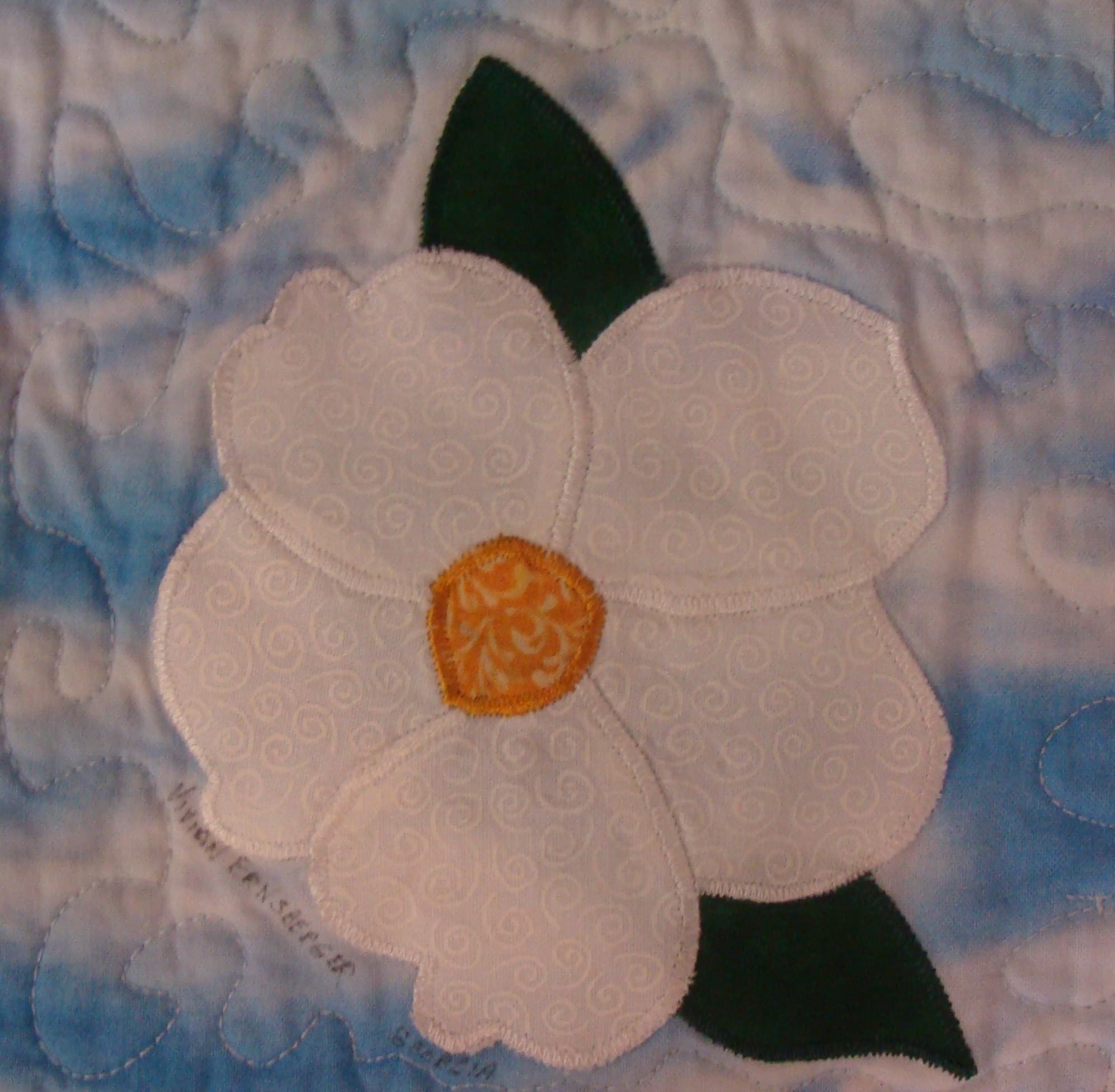 Georgia Cherokee Rose · NF17
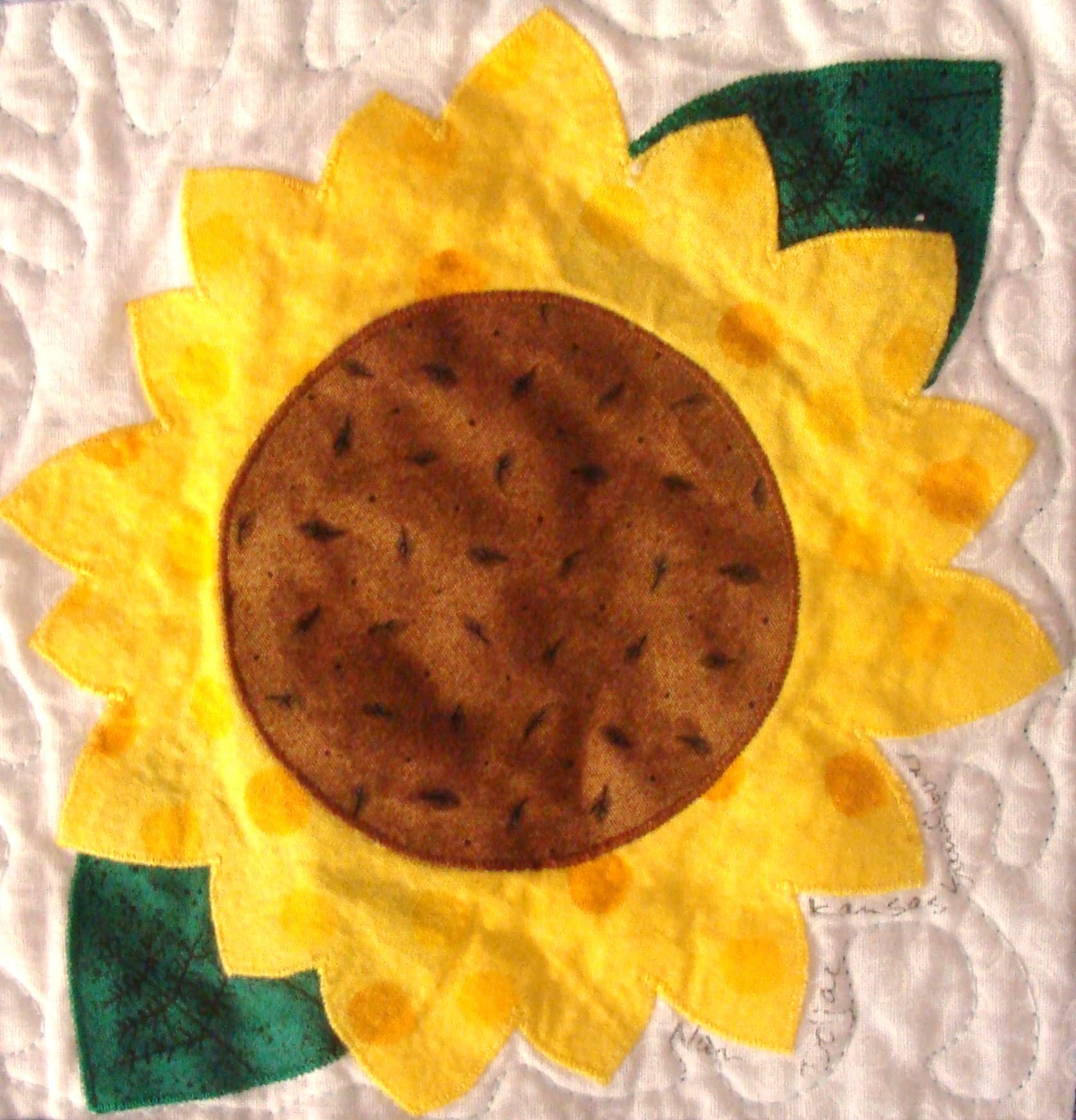 Kansas Sunflower · State Flowers swap
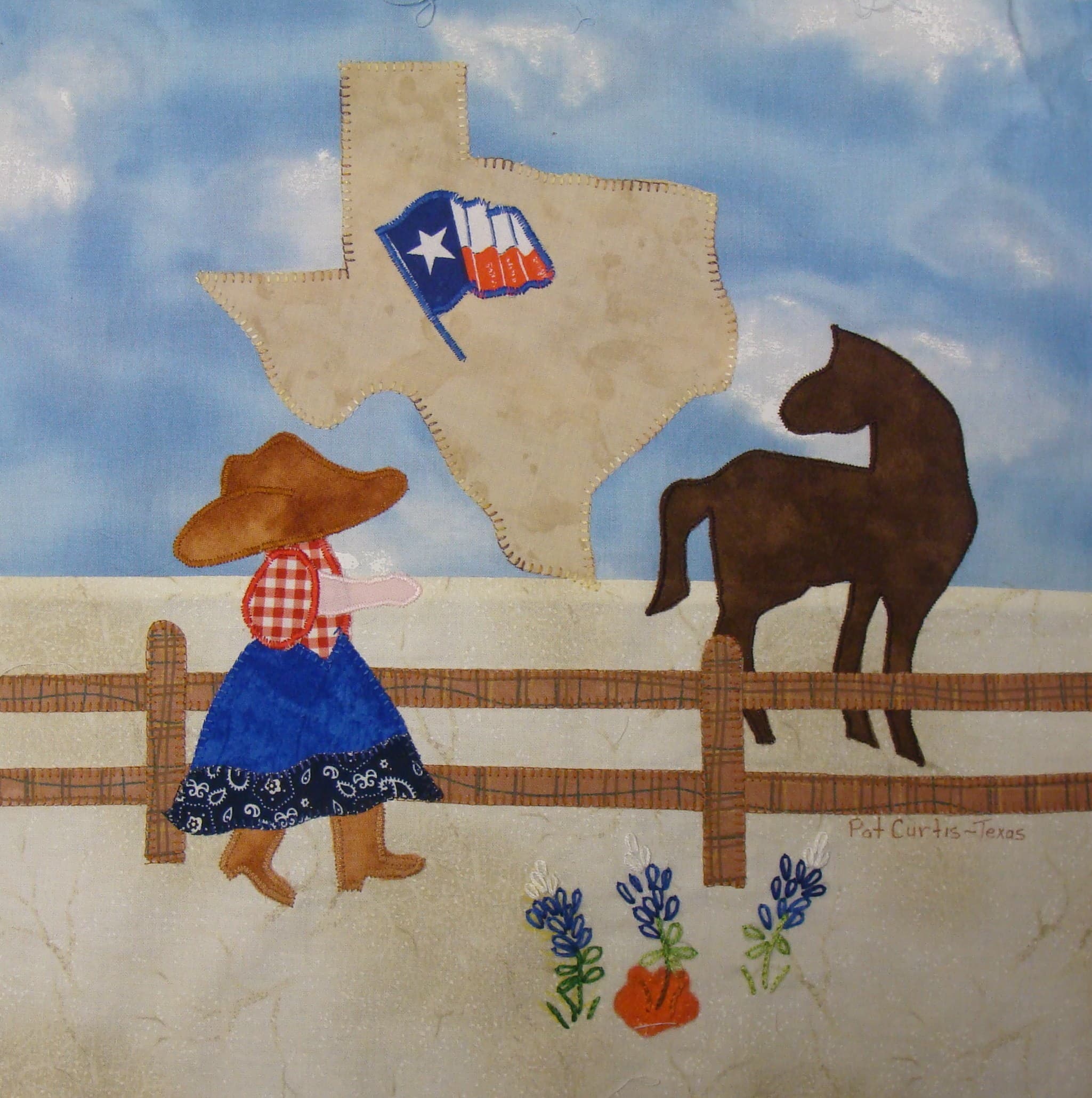 Sunbonnet Sue in Texas, by Pat Curtis
 Paper-pieced star from Alaska · NF22
Draw your own block from scratch in our free Pattern Designer, or arrange real archive blocks into a full quilt layout — fabric calculations included.