Loading…
Loading…
Four half-square triangles arranged to spin — one of the most dynamic and beginner-friendly patterns
Also known as: Whirligig · Water Wheel
The pinwheel is four identical half-square triangles turned so they appear to spin — an effect that emerges almost magically from the simplest arrangement of the simplest unit. It's beginner-friendly, fast to make, and endlessly variable.
| Fabric | Cut | For |
|---|---|---|
| Blades | 2 squares at 4⅞″ | blade squarespairs make 2 HSTs each — trim units to 4½″ |
| Background | 2 squares at 4⅞″ | background squarespairs make 2 HSTs each — trim units to 4½″ |
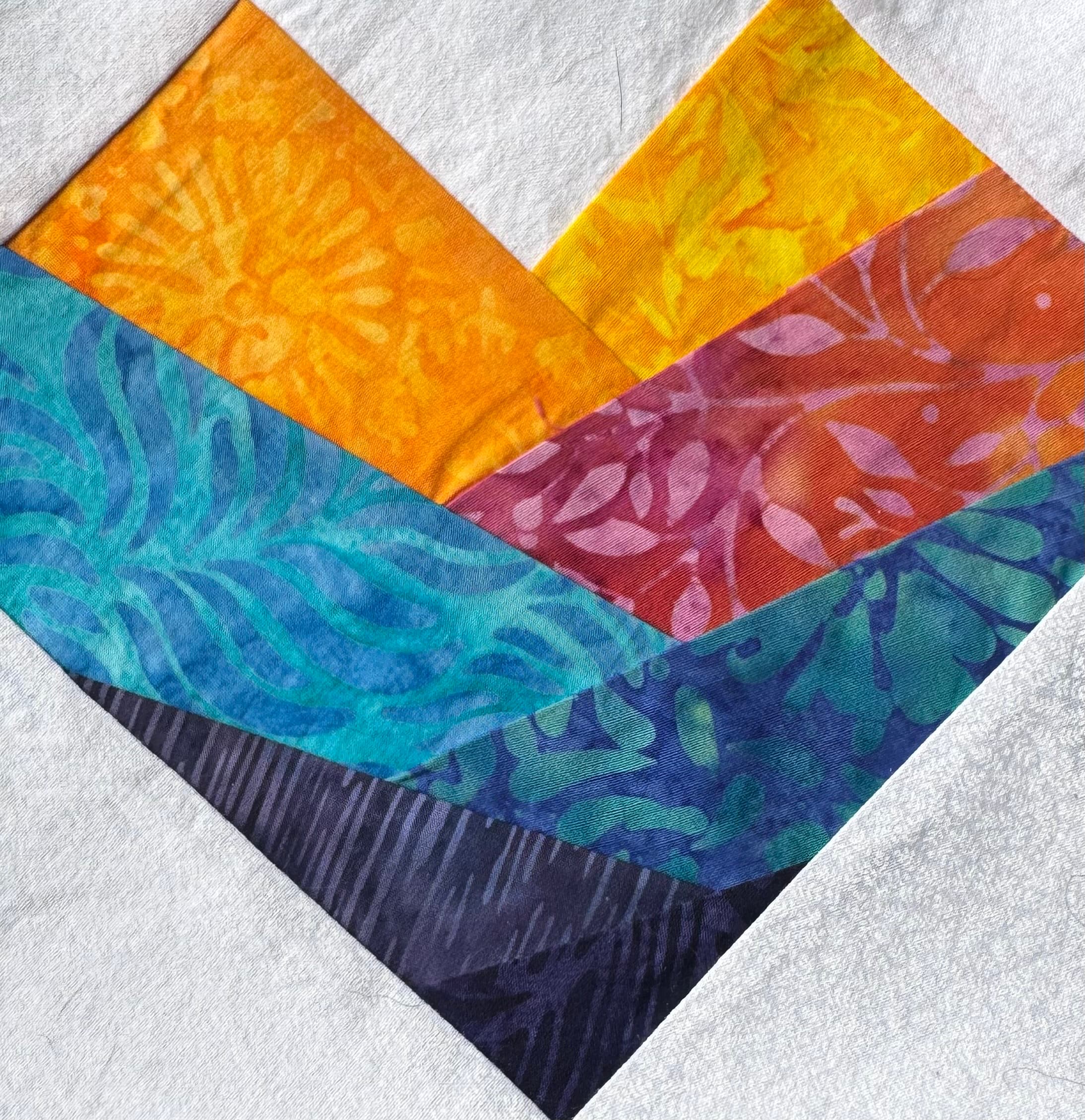
Four HSTs rotated a quarter turn each so the dark triangles spin. Spin the center seam allowances so the middle lies flat.
The Pinwheel is among the most universal of quilt block patterns — versions of it appear in American, English, Welsh, and Japanese quilting traditions, all arriving at the same spinning-triangle design independently. American examples date to the early 19th century, where the block was known by several names: Pinwheel, Whirligig, Fly, and Sugar Bowl depending on regional tradition and size.
The pattern thrives because it's both simple and visually active. A quilt of plain square blocks is static; replace those blocks with pinwheels and the eye is pulled into motion, spinning across the surface. Victorian quilters used this quality to create elaborate Pinwheel quilts from thousands of small 2" blocks — a tour de force of precision piecing that practically vibrated with energy.
Modern quilters have embraced the pinwheel as a two-fabric graphic statement — especially in the high-contrast navy/white color combinations popularized by the modern quilting movement in the 2010s. It also appears in Granny Square-style scrappy quilts where every pinwheel uses different fabrics, unified by a consistent background.
Cut two squares each of your two fabrics at your target size + ⅞" (e.g., 3⅞" for a 3" finished HST). Pair them right-sides-together, draw the diagonal, sew ¼" on each side of the line, cut, and press. You'll get four HSTs total from two pairs of squares.
Lay four HSTs in a 2×2 grid. Rotate each one so the diagonal seam spins in one direction — all four seams should "point" clockwise or all counterclockwise. The dark triangles should form a pinwheel shape.
Sew the top two HSTs together, then the bottom two. Press the top-row seam to the right; press the bottom-row seam to the left.
Sew the two rows together. At the center intersection, four seams meet. Carefully open up the center seam allowances and re-press them in a spiral (one clockwise rotation through all four seams) — this creates a flat center and reduces bulk dramatically.
Maximum contrast is the pinwheel's best friend — light background, bold foreground. The most graphic pinwheels are two-color (black/white, navy/white, red/cream). Scrappy pinwheels can use any foreground color as long as the background stays consistent in value. Avoid close-value fabrics: a pale pink pinwheel on a light cream background loses the spinning illusion entirely.
Ready to pull fabric for this one? These are the retailers we trust.
We may earn a commission on purchases made through these links, at no extra cost to you. Learn more.
Each HST in the pinwheel is itself a smaller pinwheel, creating a nested spinning effect.
The same four HSTs rotated differently — creating a windmill rather than a spinning pinwheel.
Four HSTs arranged in a checkerboard rotation rather than a pinwheel spin.
A larger block with an octagonal ring of HSTs around the central pinwheel.
NiftyFifty quilters have been swapping blocks like this one since 1997. Browse our historical archive or join a new swap.
Browse quilt swaps →The most versatile unit in patchwork — master this and you can make hundreds of different quilt patterns
Four half-square triangles arranged to spin like a windmill — movement and energy from a simple unit
A classic directional unit with countless uses — from single-row borders to full chevron quilts
Real quilters, real deadlines. Here's what's open to join.