Loading…
Loading…
Batiks are the fabric quilters either adore or haven't tried yet — hand-dyed color that shifts across every yard, a tight weave that behaves beautifully, and no wrong side. Here's what makes them different and how to sew them well.
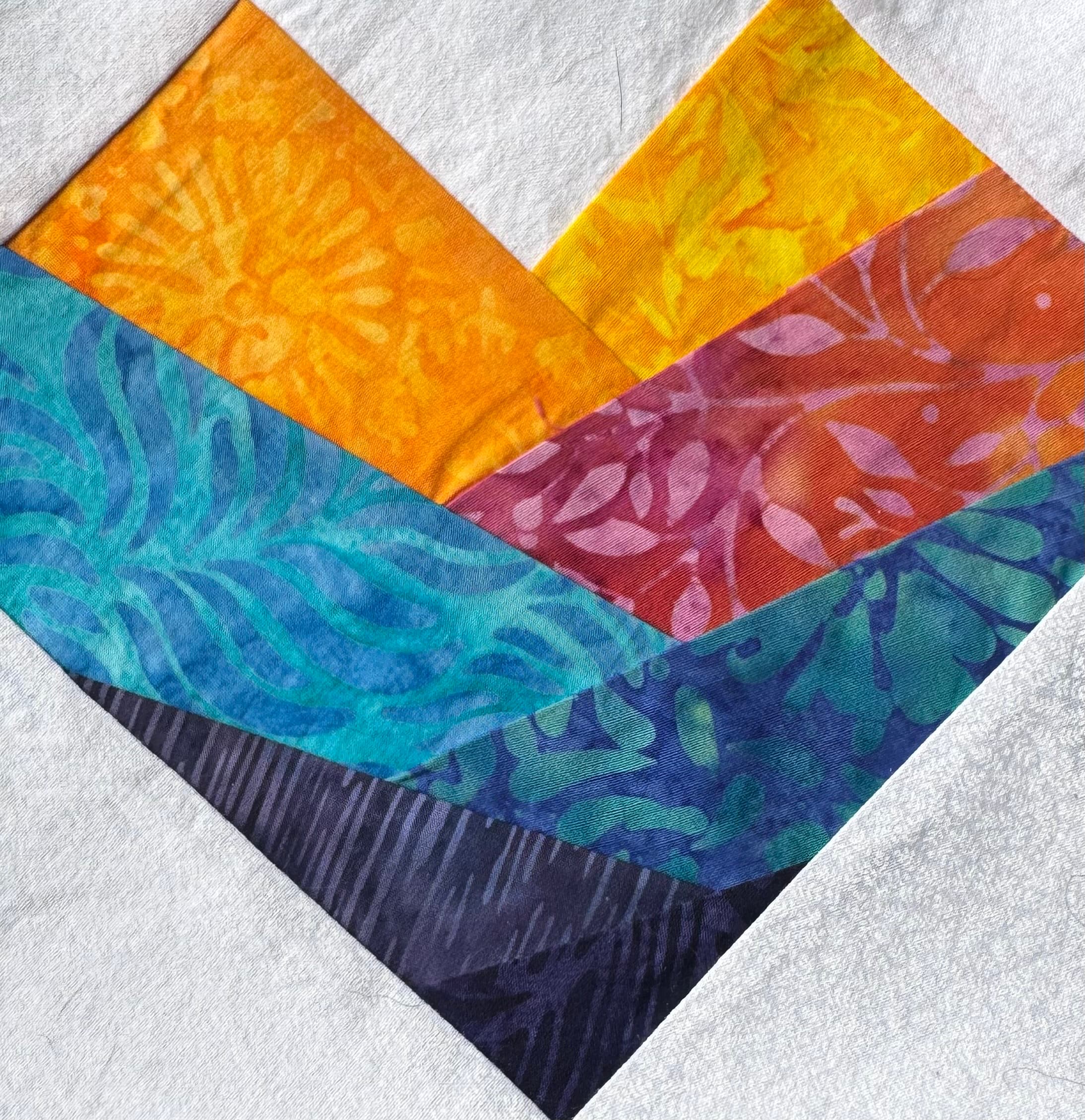
Batik is fabric that went through fire and wax to get to your cutting table: dyed in saturated color, patterned with hand-applied wax resist, and finished in a tighter, smoother weave than standard quilting cotton. Quilts made from batiks glow in a way flat prints can't quite match — and sewing them well takes exactly two adjustments, both easy.
Batik is an ancient wax-resist dyeing tradition, practiced most famously in Indonesia, where it's a national art form recognized by UNESCO. The method is the point: hot wax is applied to cloth in patterns — drawn with a pen-like canting or stamped with a copper block called a cap — and the cloth is dyed. Wherever the wax sits, dye can't reach. Boil out the wax, apply more, dye again, and layer by layer the pattern emerges. No two lengths come out identical, which is precisely the charm.
Quilting batiks — the ones filling a wall at your local quilt shop — are made largely in Indonesia using this same resist process, on a smooth, high-thread-count cotton that takes dye deeply. They arrived in the American quilting mainstream in the 1990s and never left: the saturated, mottled color reads as texture from across a room, and because the dye penetrates the cloth rather than sitting printed on top, a batik has no wrong side. Every quilter discovers the joy of that the first time a piece gets sewn in 'backwards' and it simply doesn't matter.
The tighter weave that makes batiks glow also changes their behavior in small ways: they fray less, hold crisp edges for appliqué, paper-piece beautifully — and they hold onto excess dye, which is why the prewash advice you'll hear about batiks is real advice, not superstition.
Whatever your usual prewash stance, batiks are the exception that earns the wash. Saturated hand-dyes can carry excess dye, and reds, purples, and deep blues are the usual suspects. Wash similar colors together in warm water until the rinse runs clear, and use dye-catcher sheets — if a catcher comes out dark, wash again. Ten minutes of prevention versus a navy halo on a cream background after the quilt's first bath.
The high thread count that gives batiks their glow resists a dull or heavy needle. A fresh 70/10 or 75/11 (Microtex/sharp or quilting point) pierces the dense weave cleanly instead of punching it. If you hear a faint pop-pop-pop as you sew, that's the needle asking to be replaced.
50wt cotton is right at home here, and finer 80wt threads shine in batik piecing because the tight weave grips them well. Seams press crisp and flat — batiks take a press like they were born for it, and points come out sharper than the same block in standard cotton.
Batiks are mottled, not patterned — from arm's length they behave like textured solids. That makes value (light vs. dark) do all the design work. Sort your batiks into lights, mediums, and darks before choosing a pattern, and check the sort with a phone photo in black and white. A batik quilt with strong value contrast glows; one with all mediums turns to mud, gorgeous mud though it may be.
Batiks reward patterns with big triangles and long diagonals where the mottling can shift across the patch — think stars, geese, Storm at Sea, anything with movement. They're also the classic choice for appliqué (crisp edges, no fraying) and foundation paper piecing (the tight weave doesn't distort). Tiny fussy prints they are not; give them room to pool and drift.
Batiks come to you pre-blended — every fat quarter already contains three or four shades of itself — so the usual coordination rules relax. Runs of analogous color (blues into teals into greens) blend almost seamlessly because the mottling bridges each transition; that's why watercolor and gradient quilts lean so hard on batiks. For contrast, reach across the wheel: batik oranges against batik indigos is a classic Storm at Sea look. The one trap is muddiness — because everything is mottled, a quilt of all-medium batiks loses its structure entirely. Anchor the palette with your darkest dark and a genuinely light light, and the middles can be as gloriously murky as you please.
Ready to pull fabric for this one? These are the retailers we trust.
We may earn a commission on purchases made through these links, at no extra cost to you. Learn more.
Small squares of batik arranged by value so color washes across the quilt like a sunset. Nearly impossible with printed cottons; nearly automatic with a well-sorted batik stash.
Large-triangle star patterns — Sawtooth, Ohio, Storm at Sea — where each patch is big enough for the mottling to shift across it. The fabric supplies the shimmer; the pattern supplies the geometry.
The tight weave holds a needle-turned edge crisply and reads as hand-dyed texture in leaves, petals, and landscape elements. Most contemporary landscape quilts are batik at heart.
One batik plus one solid (or near-solid) in high contrast. The solid calms the mottle, the batik animates the solid — a reliable recipe when a batik feels 'too busy' on its own.
They can — saturated hand-dyed color sometimes carries excess dye, especially in reds, purples, and deep blues. Prewash batiks in warm water with dye-catcher sheets until a catcher comes out clean, and they'll behave for the life of the quilt. It's the one fabric where even devoted non-prewashers tend to make an exception.
Batiks are dyed with a wax-resist process rather than surface-printed, on a smoother, higher-thread-count cotton. Practical differences: the color goes all the way through (no wrong side), the weave is tighter (less fraying, crisper piecing, wants a finer needle), and the patterning is mottled organic texture rather than repeating print.
Not special — just fine and fresh. A new 70/10 or 75/11 sharp pierces the dense weave cleanly. The same block sewn with a tired 90/14 is where skipped stitches and puckers come from, and the needle costs less than a fat quarter.
Absolutely, and it's one of the best-looking combinations in quilting — batiks act as textured near-solids against printed cottons. The fabrics are compatible in weight and care; just match your prewashing decision across both so they shrink together.
NiftyFifty quilters have been swapping blocks like this one since 1997. Browse our historical archive or join a new swap.
Browse quilt swaps →A complex arrangement of units creates rolling waves that seem to move across the quilt surface
Four flying geese units form four star points around a center square — a step up from Ohio Star in visual complexity
The back of a quilt gets one-third of the fabric and one-tenth of the thought. Here's how to choose backing that behaves — wide backs vs. pieced backs, how much to buy, and the mistakes that only show up after quilting.
Real quilters, real deadlines. Here's what's open to join.
 Quilting BeeOnly 1 spot left